Uncategorized
Ibogaine vs Ayahuasca: Understanding the Key Differences
Sep
Interest in plant-based psychedelic experiences has grown rapidly, and two names frequently appear in conversations about traditional healing, personal transformation, and psychedelic-assisted exploration: ibogaine and ayahuasca. But how do they differ? Is one more suitable for certain goals than the other? And what should you know before considering either experience?
Understanding ibogaine vs ayahuasca starts with recognizing that these are not interchangeable substances. They come from different plants, have distinct traditional histories, produce different subjective effects, and carry different safety considerations.
What Is Ibogaine?
Ibogaine is a naturally occurring psychoactive compound derived primarily from the root bark of the Tabernanthe iboga shrub, which is native to Central-West Africa. It has a long cultural history among Bwiti communities, particularly in Gabon, Cameroon, and surrounding regions.
In contemporary discussions, ibogaine is often associated with intensive, introspective experiences. People describe periods of vivid imagery, autobiographical reflection, emotional processing, and deep contemplation. Ibogaine has also attracted scientific interest because researchers have investigated its potential relationship with substance-use disorders.
However, ibogaine is not risk-free. One of the most important concerns is its potential effect on heart rhythm, including potentially dangerous cardiac arrhythmias. This makes medical screening, professional oversight, and careful attention to contraindications particularly important.
What Is Ayahuasca?
Ayahuasca is a traditional Amazonian psychoactive brew associated with Indigenous and mestizo communities across parts of South America. Its preparation commonly involves Banisteriopsis caapi together with a plant containing DMT, although recipes and traditions vary.
Unlike ibogaine, ayahuasca is often experienced in a ceremonial setting involving music, chanting, prayer, meditation, or other spiritual practices. Participants may report intense visual experiences, emotional release, introspection, and a changed perception of themselves or their surroundings.
Ayahuasca also deserves careful consideration from a safety perspective. Because traditional brews can contain compounds that affect monoamine oxidase, interactions with certain medications and substances can be serious. Preparation, individual health factors, and the competence of the facilitator all matter.
Ibogaine vs Ayahuasca: What’s the Difference?
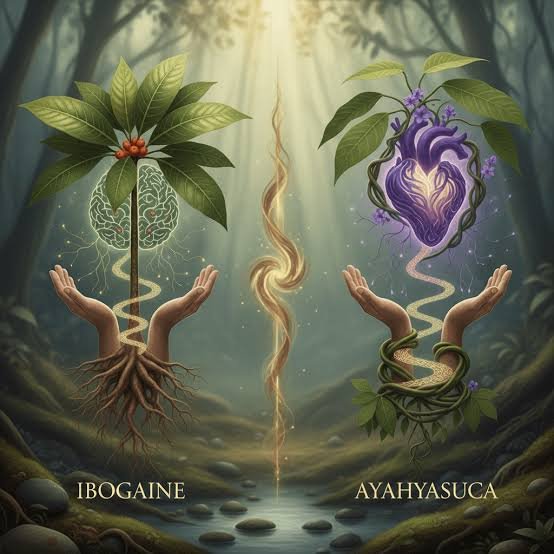
The simplest way to understand the comparison is to look at their origins, experiences, duration, traditional context, and risks.
Ibogaine originates from Central African traditions and is commonly described as producing a prolonged and highly introspective experience. Ayahuasca originates in Amazonian traditions and is more commonly associated with ceremonial and spiritual contexts.
Neither should automatically be labeled “better.” The more useful question is whether someone understands the differences and has considered the potential risks.
| Factor | Ibogaine | Ayahuasca |
|---|---|---|
| Primary traditional region | Central-West Africa | Amazonia |
| Main psychoactive compound | Ibogaine | DMT-containing preparations |
| Common context | Traditional initiation/healing and modern therapeutic research | Ceremonial and spiritual traditions |
| Experience | Often introspective and prolonged | Often visionary and emotionally intense |
| Major safety consideration | Cardiac rhythm concerns | Drug interactions and psychological/physical risks |
| Professional screening | Particularly important | Particularly important |
Which Experience Is Right for You?
There is no universally correct answer to ibogaine vs ayahuasca. These experiences should not be approached simply as wellness trends or guaranteed pathways to healing.
Anyone considering either should investigate the legal status in their location, understand possible interactions and contraindications, and seek qualified medical advice—especially if they take prescription medications or have cardiovascular, neurological, psychiatric, or other significant health concerns.
It is also worth researching the retreat or provider carefully. Look for transparent safety procedures, qualified staff, emergency planning, appropriate screening, informed consent, and clear information about what is actually provided.
The Bottom Line
Ibogaine and ayahuasca are fundamentally different psychedelic experiences with different cultural histories and safety profiles. Ibogaine is particularly notable for its cardiac risks, while ayahuasca raises important questions around medication interactions and the setting in which it is used.
Rather than asking which is “stronger” or “better,” focus on education, responsible decision-making, qualified professional guidance, and realistic expectations. Understanding the differences is the first step toward making an informed choice.
